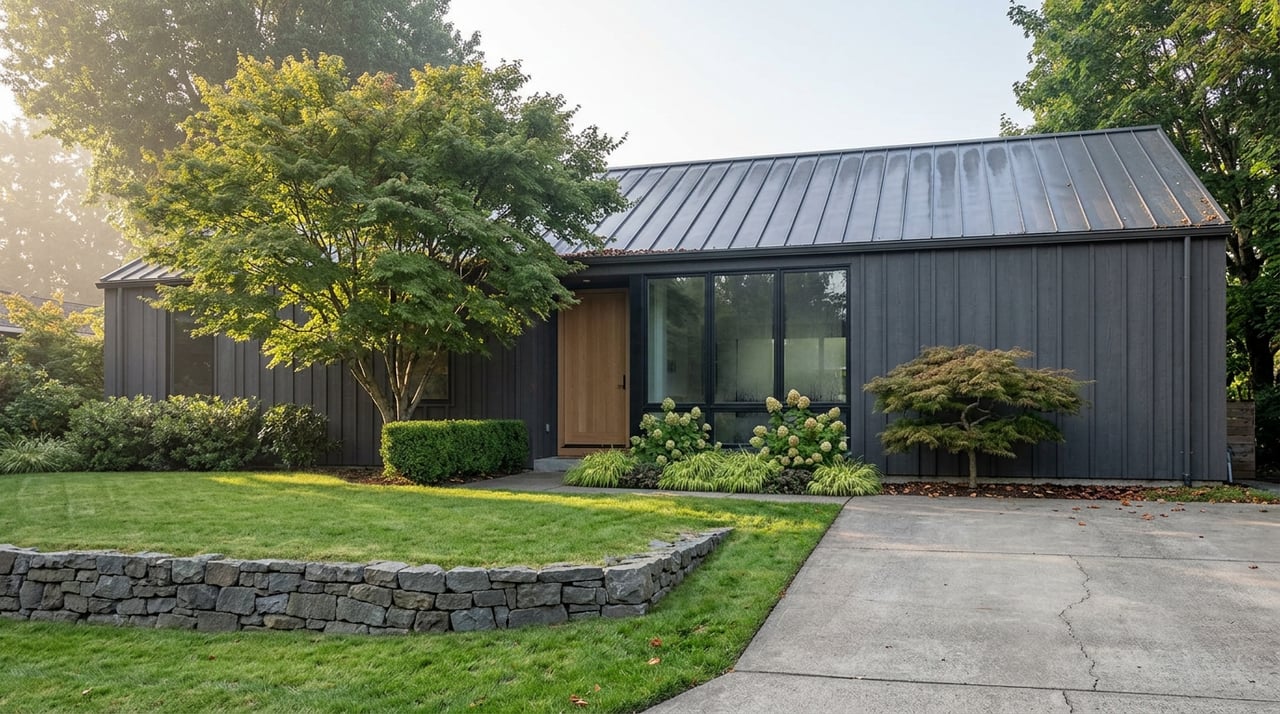
Search "Tigard home prices" and the portals will hand you a single number, as if the city priced itself as one unit. It doesn't. As of August 2026, a home on the slope of Bull Mountain was still averaging roughly 23 days on the market, while the citywide median had stretched past 100 days. Both addresses sit inside the same city limits and the same portal search. Neither pace describes the other.
Tigard's home prices right now are less a single story and more three neighborhoods pulling in different directions, and if you're shopping the city without knowing which one you're standing in, you're negotiating against a number that doesn't apply to your address.
One Median, Three Sources, Three Numbers
Part of the confusion starts before you even get to neighborhoods. Pull up three different portals and you'll get three different citywide numbers, and it isn't because anyone's data is wrong.
As of April 2026, Redfin's trailing three-month figure put Tigard's median sale price at $575,000, down about 8 percent from the same period a year earlier. Zillow's home value index, a different calculation built from estimated values rather than closed sales, showed the typical Tigard home at $617,283 as of late June 2026, down 2.9 percent year over year. Movoto's August 2026 snapshot, which tracks active list prices rather than closed sales, had the median at $651,000, down 4 to 5 percent from the year before.
None of these are contradicting each other so much as measuring different things. Sold price, estimated value, and asking price move at different speeds and respond to different pressures, and a market that's genuinely splitting by neighborhood will produce wider gaps between these numbers than a market moving as one unit. That's worth knowing before you anchor a negotiating position to whichever figure you found first.
The Hillside That Never Got the Memo
Zak Meaut, a broker with Premiere Property Group who lives in West Tigard, put it plainly when describing why the hillside behaves differently from the rest of the city. It's a pocket where homes have incredible views, with multiple mountains visible in the distance and the whole valley spread out below.
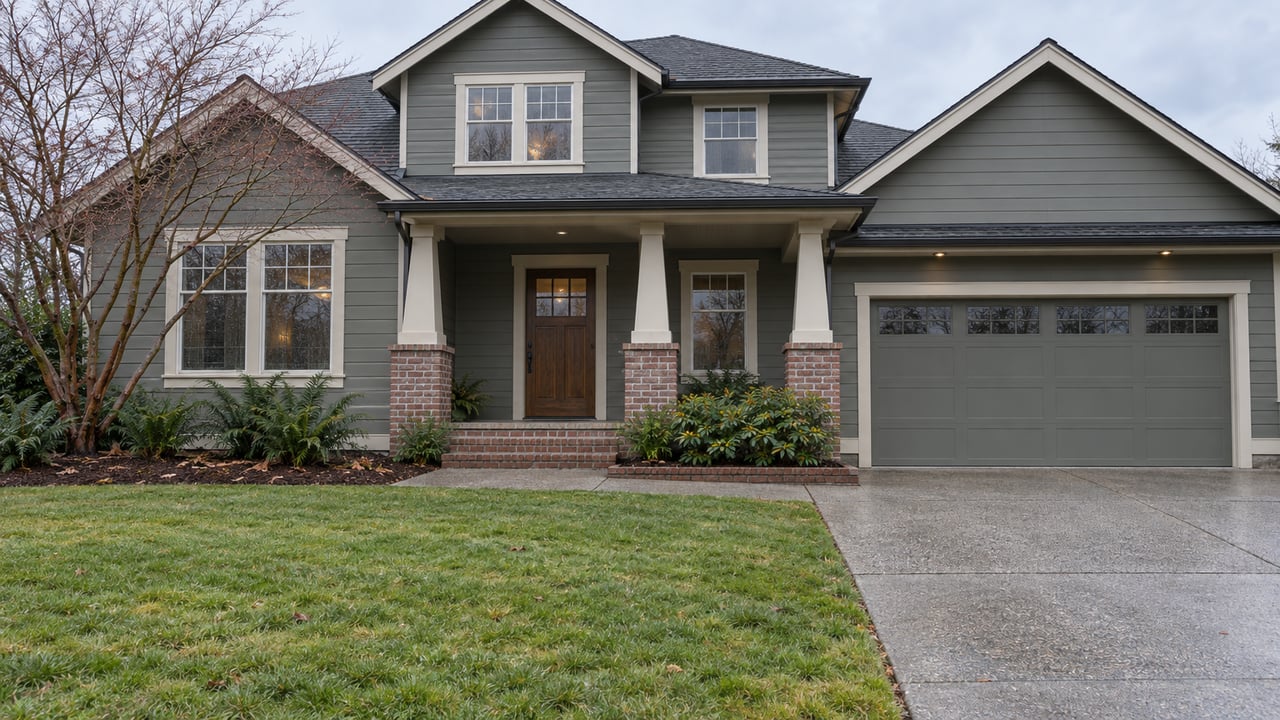
That view isn't just a selling point. It's tied to a supply constraint that's kept this corridor from moving with the rest of Tigard's 2025 softening. West Tigard and Bull Mountain are largely built out, developed in waves through the 1990s and 2000s with colonial and Tudor-influenced homes on generous lots, most of them a third of an acre or more. There isn't a pipeline of new inventory coming online to compete with what's already there.
The numbers back up what that scarcity produces. West Tigard's median sale price ran $825,000 to $875,000 as of May 2026, up modestly from the prior twelve months, and homes there were selling in as few as 23 days, well ahead of the citywide pace, which stretched past 100 days for some listings by August. Bull Mountain proper, the broader hillside area that includes newer construction and estate-sized lots, runs from roughly $650,000 to well over $1.3 million depending on lot and view.
The neighborhood carries its own daily rhythm too. Residents shop at Progress Ridge TownSquare, walk their dogs through Bull Mountain Park's ten acres of Douglas fir, and send kids to Mary Woodward Elementary before Fowler Middle and Tigard High. None of that changed when the citywide median started sliding, and that's the point. A supply-constrained neighborhood inside a softening city doesn't necessarily soften with it.
Downtown Already Cashed In On Its Own Comeback
Here's where the story stops being simple. The common assumption about downtown Tigard is that it's the affordable, still-rough-around-the-edges urban option, the place where you trade a little polish for a lower price and get to watch the neighborhood improve around you. That assumption is now out of date.
Downtown Tigard's home prices ran around $650,000 in early 2026, a figure that caught buyers off guard who'd expected a discount for the area's more transitional character. That's not a bargain relative to the rest of the city. It's roughly in line with Zillow's citywide average and not far off Bull Mountain's entry point.
The redevelopment that made downtown attractive in the first place has already started showing up in resale prices. The Tigard Transit Center connects TriMet bus lines with commuter rail into Portland and Beaverton, a real differentiator in a city built mostly for cars, and the Broadway Rose Theatre gives the area a genuine cultural anchor. What downtown doesn't yet have is a deep retail and restaurant base to match the price tag, which is the honest tradeoff buyers are making now. You're paying near-median money for a corridor that's meaningfully further along than it was five years ago but still thinner on daily amenities than the price would suggest.
The Real Entry Point Moved One Exit Over
If downtown already priced in its own turnaround, the actual discount in Tigard's urban core sits in the Tigard Triangle, the wedge of land between Highway 99W, Interstate 5, and Highway 217 that the city has been rezoning for mixed-use density.
The Triangle's median runs around $550,000, genuinely below both downtown and the citywide figures, and it's the one corridor where the infrastructure that would justify a higher price hasn't landed yet. Real mixed-use projects are moving through the city's permitting process right now under the Tigard Triangle's tax increment financing district, the same funding mechanism the city has used downtown to underwrite redevelopment. That's a meaningful distinction from downtown's story. Downtown's reinvestment has already worked its way into resale value. The Triangle's hasn't, at least not yet.
There's a nearby data point worth sitting with here. Metzger, just north of the Triangle in the same 97223 ZIP code, has one of the tightest rental markets in the Portland metro, with a vacancy rate under 2 percent. That's not a sale price statistic, but it's a demand signal. When rental vacancy runs that low right next door to a rezoning district with real projects in the pipeline, it suggests the appetite for living in this part of Tigard already exists. The sale prices just haven't caught up to it yet, which is exactly what makes the Triangle worth watching rather than dismissing as unfinished.
One more thing worth clearing up before you rule anything out by ZIP code alone: the split between 97223 and 97224 tells you almost nothing about quality on its own. The line runs roughly along McDonald Street, with the northern 97223 covering Metzger and part of Bull Mountain, while 97224 to the south covers the rest of the city along with King City and Durham. Two homes a few blocks apart in Bull Mountain itself can carry different ZIP codes and nearly identical price tags. ZIP code is a mailing convenience here, not a value signal.
What This Means Depending on What You're Solving For
- If you want a home that won't move much regardless of what the citywide median does, Bull Mountain and West Tigard are where the scarcity lives, but budget for a $650,000 floor and expect fast timelines when something comes up.
- If you want in on a corridor before its infrastructure catches up to its price, the Tigard Triangle is the one place in Tigard still priced meaningfully below the city median, with permitted projects already in motion.
- If you're comparing downtown Tigard to the Triangle as if they're interchangeable "urban core" options, know that downtown has already repriced closer to the city average. The Triangle hasn't, which is the actual gap between them right now.
A Couple of Questions Worth Asking Directly
Why does Zillow's number differ so much from what my agent pulls from the MLS? Zillow's figure is an estimated value index updated monthly across all homes, not just the ones that sold. Your agent's number, pulled from RMLS listing data, reflects actual closed transactions in a specific window. In a market splitting by sub-neighborhood the way Tigard's is right now, those two methods will diverge more than usual, because the mix of what's actually selling shifts the median in ways an estimate-based index takes longer to reflect.
Does the Tigard Triangle's TIF district affect what I'd pay in property taxes if I buy there now? Tax increment financing redirects the growth in assessed value within the district toward funding the redevelopment itself. According to the City of Tigard, it shows up as a line item on your tax bill, but it doesn't function as an added tax rate on top of what you'd otherwise pay. The mechanics are worth understanding before you buy in an active redevelopment zone, and your title company or lender can walk through your specific parcel's numbers as part of closing.
If you're trying to figure out which version of Tigard actually matches your budget and your timeline, that's exactly the kind of neighborhood-level read a citywide median can't give you. The Lankheet Group works these Tigard sub-markets block by block, and a free home valuation is the fastest way to see where your specific address actually sits inside all of this.
This article is general information, not legal, tax or financial advice. Consult a qualified professional about your situation.